Author: Richard Seroter

  • Data Stream Processing with Amazon Kinesis and .NET Applications

    Amazon Kinesis is a new data stream processing service from AWS that makes it possible to ingest and read high volumes of data in real-time. That description may sound vaguely familiar to those who followed Microsoft’s attempts to put their CEP engine StreamInsight into the Windows Azure cloud as part of “Project Austin.” Two major differences between the two: Kinesis doesn’t have the stream query aspects of StreamInsight, and Amazon actually SHIPPED their product.

    Kinesis looks pretty cool, and I wanted to try out a scenario where I have (1) a Windows Azure Web Site that generates data, (2) Amazon Kinesis processing data, and (3) an application in the CenturyLink Cloud which is reading the data stream.

    2014.01.08kinesis05

    What is Amazon Kinesis?

    Kinesis provides a managed service that handles the intake, storage, and transportation of real-time streams of data. Each stream can handle nearly unlimited data volumes. Users set up shards which are the means for scaling up (and down) the capacity of the stream. All the data that comes into the a Kinesis stream is replicated across AWS availability zones within a region. This provides a great high availability story. Additionally, multiple sources can write to a stream, and a stream can be read by multiple applications.

    Data is available in the stream for up to 24 hours, meaning that applications (readers) can pull shard records based on multiple schemes: given sequence number, oldest record, latest record. Kinesis uses DynamoDB to store application state (like checkpoints). You can interact with Kinesis via the provided REST API or via platform SDKs.

    What DOESN’T Kinesis do? It doesn’t have any sort of adapter model, so it’s up to the developer to build producers (writers) and applications (readers). There is a nice client library for Java that has a lot of built in logic for application load balancing and such. But for the most part, this is still a developer-oriented solution for building big data processing solutions.

    Setting up Amazon Kinesis

    First off, I logged into the AWS console and located Kinesis in the navigation menu.

    2014.01.08kinesis01

    I’m then given the choice to create a new stream.

    2014.01.08kinesis02

    Next, I need to choose the initial number of shards for the stream. I can either put in the number myself, or use a calculator that helps me estimate how many shards I’ll need based on my data volume.

    2014.01.08kinesis03

    After a few seconds, my managed Kinesis stream is ready to use. For a given stream, I can see available shards, and some CloudWatch metrics related to capacity, latency, and requests.

    2014.01.08kinesis04

    I now have an environment for use!

    Creating a data producer

    Now I was ready to build an ASP.NET web site that publishes data to the Kinesis endpoint. The AWS SDK for .NET already Kinesis objects, so no reason to make this more complicated than it has to be. My ASP.NET site has NuGet packages that reference JSON.NET (for JSON serialization), AWS SDK, jQuery, and Bootstrap.

    2014.01.08kinesis06

    The web application is fairly basic. It’s for ordering pizza from a global chain. Imagine sending order info to Kinesis and seeing real-time reactions to marketing campaigns, weather trends, and more. Kinesis isn’t a messaging engine per se, but it’s for collecting and analyzing data. Here, I’m collecting some simplistic data in a form.

    2014.01.08kinesis07

    When clicking the “order” button, I build up the request and send it to a particular Kinesis stream. First, I added the following “using” statements:

    using Newtonsoft.Json;
    using Amazon.Kinesis;
    using Amazon.Kinesis.Model;
    using System.IO;
    using System.Text;
    

    The button click event has the following (documented) code.  Notice a few things. My AWS credentials are stored in the web.config file, and I pass in an AmazonKinesisConfig to the client constructor. Why? I need to tell the client library which AWS region my Kinesis stream is in so that it can build the proper request URL. See that I added a few properties to the actual put request object. First, I set the stream name. Second, I added a partition key which is used to place the record in a given shard. It’s a way of putting “like” records in a particular shard.

    protected void btnOrder_Click(object sender, EventArgs e)
        {
            //generate unique order id
            string orderId = System.Guid.NewGuid().ToString();
    
            //build up the CLR order object
            Order o = new Order() { Id = orderId, Source = "web", StoreId = storeid.Text, PizzaId = pizzaid.Text, Timestamp = DateTime.Now.ToString() };
    
            //convert to byte array in prep for adding to stream
            byte[] oByte = Encoding.UTF8.GetBytes(JsonConvert.SerializeObject(o));
    
            //create stream object to add to Kinesis request
            using (MemoryStream ms = new MemoryStream(oByte))
            {
                //create config that points to AWS region
                AmazonKinesisConfig config = new AmazonKinesisConfig();
                config.RegionEndpoint = Amazon.RegionEndpoint.USEast1;
    
                //create client that pulls creds from web.config and takes in Kinesis config
                AmazonKinesisClient client = new AmazonKinesisClient(config);
    
                //create put request
                PutRecordRequest requestRecord = new PutRecordRequest();
                //list name of Kinesis stream
                requestRecord.StreamName = "OrderStream";
                //give partition key that is used to place record in particular shard
                requestRecord.PartitionKey = "weborder";
                //add record as memorystream
                requestRecord.Data = ms;
    
                //PUT the record to Kinesis
                PutRecordResponse responseRecord = client.PutRecord(requestRecord);
    
                //show shard ID and sequence number to user
                lblShardId.Text = "Shard ID: " + responseRecord.ShardId;
                lblSequence.Text = "Sequence #:" + responseRecord.SequenceNumber;
            }
        }
    

    With the web application done, I published it to a Windows Azure Web Site. This is super easy to do with Visual Studio 2013, and within a few seconds my application was there.

    2014.01.08kinesis08

    Finally, I submitted a bunch of records to Kinesis by adding pizza orders. Notice the shard ID and sequence number that Kinesis returns from each PUT request.

    2014.01.08kinesis09

    Creating a Kinesis application (record consumer)

    To realistically read data from a Kinesis stream, there are three steps. First, you need to describe the stream in order to find out the shards. If I want a fleet of servers to run this application and read the stream, I’d need a way for each application to claim a shard to work on. The second step is to retrieve a “shard iterator” for a given shard. The iterator points to a place in the shard where I want to start reading data. Recall from above that I can start with the latest unread records, oldest records, or at a specific point in the shard. The third and final step is to get the records from a particular iterator. Part of the result set of this operation is a “next iterator” value. In my code, if I find another iterator value, I once again call the “get records” operation to pull any records from that iterator position.

    Here’s the total code block, documented for your benefit.

    private static void ReadFromKinesis()
    {
        //create config that points to Kinesis region
        AmazonKinesisConfig config = new AmazonKinesisConfig();
        config.RegionEndpoint = Amazon.RegionEndpoint.USEast1;
    
       //create new client object
       AmazonKinesisClient client = new AmazonKinesisClient(config);
    
       //Step #1 - describe stream to find out the shards it contains
       DescribeStreamRequest describeRequest = new DescribeStreamRequest();
       describeRequest.StreamName = "OrderStream";
    
       DescribeStreamResponse describeResponse = client.DescribeStream(describeRequest);
       List<Shard> shards = describeResponse.StreamDescription.Shards;
       foreach(Shard s in shards)
       {
           Console.WriteLine("shard: " + s.ShardId);
       }
    
       //grab the only shard ID in this stream
       string primaryShardId = shards[0].ShardId;
    
       //Step #2 - get iterator for this shard
       GetShardIteratorRequest iteratorRequest = new GetShardIteratorRequest();
       iteratorRequest.StreamName = "OrderStream";
       iteratorRequest.ShardId = primaryShardId;
       iteratorRequest.ShardIteratorType = ShardIteratorType.TRIM_HORIZON;
    
       GetShardIteratorResponse iteratorResponse = client.GetShardIterator(iteratorRequest);
       string iterator = iteratorResponse.ShardIterator;
    
       Console.WriteLine("Iterator: " + iterator);
    
       //Step #3 - get records in this iterator
       GetShardRecords(client, iterator);
    
       Console.WriteLine("All records read.");
       Console.ReadLine();
    }
    
    private static void GetShardRecords(AmazonKinesisClient client, string iteratorId)
    {
       //create reqest
       GetRecordsRequest getRequest = new GetRecordsRequest();
       getRequest.Limit = 100;
       getRequest.ShardIterator = iteratorId;
    
       //call "get" operation and get everything in this shard range
       GetRecordsResponse getResponse = client.GetRecords(getRequest);
       //get reference to next iterator for this shard
       string nextIterator = getResponse.NextShardIterator;
       //retrieve records
       List<Record> records = getResponse.Records;
    
       //print out each record's data value
       foreach (Record r in records)
       {
           //pull out (JSON) data in this record
           string s = Encoding.UTF8.GetString(r.Data.ToArray());
           Console.WriteLine("Record: " + s);
           Console.WriteLine("Partition Key: " + r.PartitionKey);
       }
    
       if(null != nextIterator)
       {
           //if there's another iterator, call operation again
           GetShardRecords(client, nextIterator);
       }
    }
    

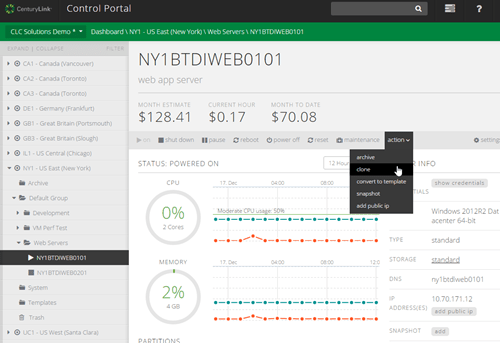
    Now I had a working Kinesis application that can run anywhere. Clearly it’s easy to run this on AWS EC2 servers (and the SDK does a nice job with retrieving temporary credentials for apps running within EC2), but there’s a good chance that cloud users have a diverse portfolio of providers. Let’s say I love the application services from AWS, but like the server performance and management capabilities from CenturyLink. In this case, I built a Windows Server to run my Kinesis application.

    2014.01.08kinesis10

    With my server ready, I ran the application and saw my shards, my iterators, and my data records.

    2014.01.08kinesis11

    Very cool and pretty simple. Don’t forget that each data consumer has some work to do to parse the stream, find the (partition) data they want, and perform queries on it. You can imagine loading this into an Observable and using LINQ queries on it to aggregate data. Regardless, it’s very nice to have a durable stream processing service that supports replays and multiple readers.

    Summary

    The “internet of things” is here, and companies that can quickly gather and analyze data will have a major advantage. Amazon Kinesis is an important service to that end, but don’t think of it as something that ONLY works with other applications in the AWS cloud. We saw here that you could have all sorts of data producers running on devices, on-premises, or in other clouds. The Kinesis applications that consume data can also run virtually anywhere. The modern architect recognizes that composite applications are the way to go, and hopefully this helped you understand another services that’s available to you!

  • How Do I Get Things Done? New Pluralsight Course Reveals All My Secrets

    Back in August when I released a Pluralsight course on Optimizing Systems on AWS, the most frequent question I heard had nothing to do with AWS or the cloud. Instead, it was the familiar “how do you do so much stuff?” Various suggestions have been offered: robot twin, outsourcing to South America, zero sleep. Alas, the truth is less sensational. I’ve learned over the years (from experience, studying, and watching others) to be ruthless about efficiency and always take a strategic viewpoint on new opportunities. During the past few months I’ve jotted down all my techniques – as well as those used by a host of my fellow Pluralsight authors – and put them all into a single, 1 hour Pluralsight course that was released today.

    Productivity Tips for the Busy Tech Professional is a collection of 17 actionable tips for getting control over your busy schedule and spending more of your time on the things you enjoy. The course is broken up into three short modules:

    • Setting the Foundation. A handful of tips that will shape how you approach your activities.
    • Establishing a Frame of Mind. Tips for better decision making and prioritization.
    • Managing Time Effectively. Batch of tips for the day-to-day activities that will help you make better use of your available time.

    No theoretical stuff here. It’s all (hopefully) practical advice that you can use RIGHT NOW to get more done while keeping your work/life balance under control. Now, obviously everyone is different and for some, these tips won’t make a difference or you might completely disagree with them. That’s cool with me, as I’m just hoping to inspire change (large or small) that helps us all become happier and more fulfilled.

    So watch this course on your lunch break, and let me know what you think! Something you agree/disagree with? Have your own tips to share? I’d really love to hear it.

  • Favorite Books and Blog Posts of 2013

    The year is nearly up, and it’s been a good one. 30+ posts on the blog, job changes, 4 new Pluralsight courses, twice-monthly InfoQ.com contributions, graduation with a Masters Degree in Engineering, and speaking engagements around the world (Amsterdam, Gothenburg, New Orleans, San Francisco, London, and Chicago). Here’s a quick recap of my favorite blogs posts (from here, or other places that I write), and some of the best books that I read this year.

    Blog Posts

    While this was one of my quieter years on the blog, I probably wrote more than ever before thanks to the variety of places that I publish things. Here were some of my favorites:

    Books

    I read a few dozen books this year, and these were the ones that stood out for being informative, interesting, and inspirational.

    Once again, thanks to all of you for continuing to read my work and inspiring me to keep it up!

  • How Do BizTalk Services Work? I Asked the Product Team to Find Out

    Windows Azure BizTalk Services was recently released by Microsoft, and you can find a fair bit about this cloud service online. I wrote up a simple walkthrough, Sam Vanhoutte did a nice comparison of features between BizTalk Server and BizTalk Services,  the Neudesic folks have an extensive series of blog posts about it, and the product documentation isn’t half bad.

    However, I wanted to learn more about how the service itself works, so I reached out to Karthik Bharathy who is a senior PM on the BizTalk team and part of the team that shipped BizTalk Services. I threw a handful of technical questions at him, and I got back some fantastic answers. Hopefully you learn something new;  I sure did!

    Richard: Explain what happens after I deploy an app. Do you store the package in my storage account and add it to a new VM that’s in a BizTalk Unit?

    Karthik: Let’s start with some background information – the app that you are referring today is the VS project with a combination of the bridge configuration and artifacts like maps, schemas and DLLs. When you deploy the project, each of the artifacts and the bridge configuration are uploaded into one by one. The same notion also applies through the BizTalk Portal when you are deploying an agreement and uploading artifacts to the resources.

    The bridge configuration represents the flow of the message in the pipeline in XML format. Every time you build BizTalk Services project in Visual Studio, an <entityName>.Pipeline.atom is generated in the project bins folder. This atom file is the XML representation of the pipeline configuration. For example, under the <pipelines> section you can see the bridges configured along with the route information. You can also get a similar listing by issuing a GET operation on the bridge endpoint with the right ACS credentials.

    Now let’s say the bridge is configured with Runtime URL <deploymentURL>/myBridge1. After you click deploy, the pipeline configuration gets published in the repository of the <deploymentURL> for handling /myBridge1. For every message sent to the <deploymentURL>, the role looks at the complete path including /myBridge1 and load the pipeline configuration from the repository. Once the pipeline configuration is loaded, the message is processed per the configuration. If the configuration does not exist, then an error is returned to the caller.

    Richard: What about scaling an integration application? How does that work?

    Karthik: Messages are processed by integration roles in the deployment. When the customer initiates a scale operation, we update the service configuration to add/remove instances based on the ask. The BizTalk Services deployment updates its state during scaling operation and new messages to the deployment is handled by one of the instances of the role. This is similar to how Web or Worker roles are scaled up/down in Azure today.

    Richard: Is there any durability in the bridge? What if a downstream endpoint is offline?

    Karthik: The concept of a bridge is close to a messaging channel if we may borrow the phrase from Enterprise Integration Patterns. It helps in bridging the impedance between two messaging systems. As such the bridge is a stateless system and does not have persistence built into it. Therefore bridges need to report any processing errors back to the sender. In the case where the downstream endpoint is offline, the bridge propagates the error back to the sender – the semantics are slightly different a) based on the bridge and b) based on the source from where the message has been picked up.

    For EAI, bridges with HTTP the error code is sent back to the sender while with the same bridge using an FTP head, the system tries to pickup and process the message again from the source at regular intervals (and errors out eventually). In both cases you can see relevant track records in the portal.

    For B2B, our customers rarely intend to send an HTTP error back to their partners. When the message cannot be sent to a downstream (success) endpoint, the message is routed to the suspend endpoint. You might argue that the suspend endpoint could be down as well – while this is generally a bad idea to put in a flaky target in success or suspend endpoints, we don’t rule out this possibility. In the worst case we deliver the error code back to the sender.

    Richard: Bridges resemble BizTalk Server ESB Toolkit itineraries. Did you ever consider re-using that model?

    Karthik: ESB is an architectural pattern and you should look at the concept of bridge as being part of the ESB model for BizTalk Services on Azure. The sources and destinations are similar to the on-ramp, off-ramp model and the core processing is part of the bridge. Of course, additional capabilities like exception management, governance, alerts will need to added to bring it closer to the ESB Toolkit.

    Richard: How exactly does the high availability option work?

    Karthik: Let’s revisit the scaling flow we talked about earlier. If we had a scale >=2, you essentially have a system that can process messages even when one of the machines can down in your configuration. If one of the machines are down, the load balancer in our system routes the message to the running instances. For example, this is taken care of during “refresh” when customers can restart their deployment after updating a user DLL. This ensures message processing is not impacted.

    Richard: It looks like backup and restore is for the BizTalk Services configuration, not tracking data. What’s the recommended way to save/store an audit trail for messages?

    Karthik: The purpose of backup and restore is for the deployment configuration including schemas, maps, bridges, agreements. The tracking data comes from the Azure SQL database provided by the customer. The customer can add the standard backup/restore tools directly on that storage. To save/store an audit of messages, you have couple of options at the moment – with B2B you can turn archiving on either AS2 or X12 processing and with EAI you can plug-in an IMessageInspector extension that can read the IMessage data and save it to an external store.

    Richard: What part of the platform are you most excited about?

    Karthik: Various aspects of the platform are exciting – we started off building capabilities with ‘AppFabric Connect’ to enable server customers leverage existing investments with the cloud. Today, we have built a richer set of functionality with BizTalk Adapter services to connect popular LOBs with Bridges. In the case of B2B, BizTalk Server traditionally exposed functionality for IT Operators to manage trading partner relationships using the Admin Console. Today, we have a rich TPM functionality in the BizTalk Portal and also have the OM API public for the developer community. In EAI we allow extending message processing using custom code  If I should call out one I like, it has to be custom code enablement. The dedicated deployment model managed by Microsoft makes this possible. It is always a challenge to enable user DLL to execute without providing some sort of sandboxing. Then there are also requirements around performance guarantees. BizTalk Services dedicated deployment takes care of all these – if the code behaves in an unexpected way, only that deployment is affected. As the resources are isolated, there are also better guarantees about the performance. In a configuration driven experience this makes integration a whole lot simpler.

    Thanks Karthik for an informative chat!

  • Window Azure BizTalk Services: How to Get Started and When to Use It

    The “integration as a service” space continues to heat up, and Microsoft officially entered the market with the General Availability of Windows Azure BizTalk Services (WABS) a few weeks ago.  I recently wrote up an InfoQ article that summarized the product and what it offered. I also figured that I should actually walk through the new installation and deployment process to see what’s changed. Finally, I’ll do a brief assessment of where I’d consider using this vs. the other cloud-based integration tools.

    Installation

    Why am I installing something if this is a cloud service? Well, the development of integration apps still occurs on premises, so I need an SDK for the necessary bits. Grab the Windows Azure BizTalk Services SDK Setup and kick off the process. I noticed what seems to be a much cleaner installation wizard.

    2013.12.10biztalkservices01

    After choosing the components that I wanted to install (including the runtime, developer tools, and developer SDK) …

    2013.12.10biztalkservices02

    … you are presented with a very nice view of the components that are needed, and which versions are already installed.

    2013.12.10biztalkservices03

    At this point, I have just about everything on my local developer machine that’s needed to deploy an integration application.

    Provisioning

    WABS applications run in the Windows Azure cloud. Developers provision and manage their WABS instances in the Windows Azure portal. To start with, choose App Services and then BizTalk Services before selecting Custom Create.

    2013.12.10biztalkservices04

    Next, I’m asked to pick an instance name, edition, geography, tracking database, and Windows Azure subscription. There are four editions: basic, developer, standard, and premium. As you move between editions (and pay more money), you have access to greater scalability, more integration applications, on-premises connectivity, archiving, and high availability.

    2013.12.10biztalkservices05

    I created a new database instance and storage account to ensure that there would be no conflicts with old (beta) WABS instances. Once the provisioning process was complete (maybe 15 minutes or so), I saw my new instance in the Windows Azure Portal.

    2013.12.10biztalkservices07

    Drilling into the WABS instance, I saw connection strings, IP addresses, certificate information, usage metrics, and more.

    2013.12.10biztalkservices08

    The Scale tab showed me the option to add more “scale units” to a particular instance. Basic, standard and premium edition instances have “high availability” built in where multiple VMs are beneath a single scale unit. Adding scale units to an instance requires standard or premium editions.

    2013.12.10biztalkservices09

    In the technical preview and beta releases of WABS, the developer was forced to create a self-signed certificate to use when securing a deployment. Now, I can download a dev certificate from the Portal and install it into my personal certificate store and trusted root authority. When I’m ready for production, I can also upload an official certificate to my WABS instance.

    Developing

    WABS projects are built in Visual Studio 2012/2013. There’s an entirely new project type for WABS, and I could see it when creating a new project.

    2013.12.10biztalkservices10

    Let’s look at what we have in Visual Studio to create WABS solutions. First, the Server Explorer includes a WABS component for creating cloud-accessible connections to line-of-business systems. I can create connections to Oracle/SAP/Siebel/SQL Server repositories on-premises and make them part of the “bridges” that define a cloud integration process.

    2013.12.10biztalkservices11

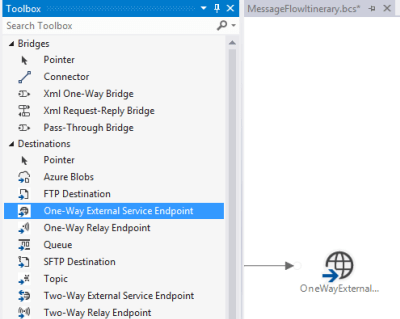
    Besides line-of-business endpoints, what else can you add to a Bridge? The final palette of activities in the Toolbox is shown below. There are a stack of destination endpoints that cover a wide range of choices. The source options are limited, but there are promises of new items to come. The Bridges themselves support one-way or request-response scenarios.

    2013.12.10biztalkservices12

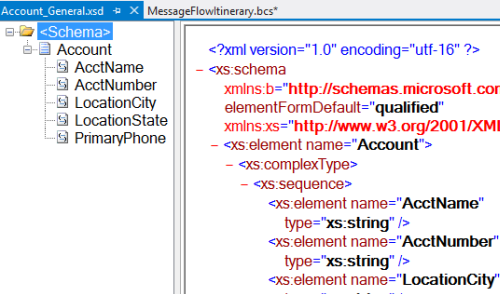
    Bridges expect either XML or flat file messages. A message is defined by a schema. The schema editor is virtually identical to the visual tool that ships with the standard BizTalk Server product. Since source and destination message formats may differ, it’s often necessary to include a transformation component. Transformation is done via a very cool Mapper that includes a sophisticated set of canned operations for transforming the structure and content of a message. This isn’t the Mapper that comes with BizTalk Server, but a much better one.

    2013.12.10biztalkservices14


    A bridge configuration model includes a source, one or more bridges (which can be chained together), and one or more destinations. In the case below, I built a simple one-way model that routes to a Windows Azure Service Bus Queue.

    2013.12.10biztalkservices15

    Double-clicking a particular bridge shows me the bridge configuration. In this configuration, I specified an XML schema for the inbound message, and a transformation to a different format.

    2013.12.10biztalkservices16


    At this point, I have a ready-to-go integration solution.

    Deploying

    To deploy one of theses solutions, you’ll need a certificate installed (see earlier note), and the Windows Azure Access Control Service credentials shown in the Windows Azure Portal. With that info handy, I right-clicked the project in Visual Studio and chose Deploy. Within a few seconds, I was told that everything was up and running. To confirm, I clicked the Manage button on the WABS instance page was visited the WABS-specific Portal. This Portal shows my deployed components, and offers tracking services. Ideally, this would be baked into the Windows Azure Portal itself, but at least it somewhat resembles the standard Portal.

    2013.12.10biztalkservices17

    So it looks like I have everything I need to build a test.

    Testing

    I finally built a simple Console application in Visual Studio to submit a message to my Bridge. The basic app retrieved a valid ACS token and sent it along with my XML message to the bridge endpoint. After running the app, I got back the tracking ID for my message.

    2013.12.10biztalkservices19

    To actually see that this worked, I first looked in the WABS Portal to find the tracked instance. Sure enough, I saw a tracked message.

    2013.12.10biztalkservices18

    As a final confirmation, I opened up the powerful Service Bus Explorer tool and connected to my Windows Azure account. From here, I could actually peek into the Windows Azure Service Bus Queue that the WABS bridge published to. As you’d expect, I saw the transformed message in the queue.

    2013.12.10biztalkservices20

    Verdict

    There is a wide spectrum of products in the integration-as-a-service domain. There are batch-oriented tools like Informatica Cloud and Dell Boomi, and things like SnapLogic that handle both real-time and batch. Mulesoft sells the CloudHub which is a comprehensive platform for real-time integration. And of course, there are other integration solutions like AWS Simple Notification Services or the Windows Azure Service Bus.
    So where does WABS fit in? It’s clearly message-oriented, not batch-oriented. It’s more than a queuing solution, but less than an ESB. It seems like a good choice for simple connections between different organizations, or basic EDI processing. There are a decent number of source and destination endpoints available, and the line-of-business connectivity is handy. The built in high availability and optional scalability mean that it can actually be used in production right now, so that’s a plus.
    There’s still lots of room for improvement, but I guess that’s to be expected with a v1 product. I’d like to see a better entry-level pricing structure, more endpoint choices, more comprehensive bridge options (like broadcasting to multiple endpoints), built-in JSON support, and SDKs that support non-.NET languages.
    What do you think? See any use cases where you’d use this today, or are there specific features that you’ll be waiting for before jumping in?

  • New Job, Same Place (Kind Of)

    For the past 18 months, I’ve been a product manager at a small but innovative cloud provider called Tier 3. We’ve been doing amazing work and I’ve had fun being part of such a high performing team. Last week, we were acquired by telecommunications giant CenturyLink and instantly rebranded the CenturyLink Cloud. The team stays intact and will run as a relatively independent unit.

    The reaction to this acquisition was universally positive. Ben Kepes of Forbes wrote:

    This deal sees Tier 3 able to scale its existing IaaS and PaaS offerings to a far greater audience upon CenturyLink’s massive global footprint.

    This is a transformational deal for the industry – Tier 3′s credibility, matched with Century Links asset base and capital base – could change the face of cloud infrastructure as we know it.

    NetworkWorld also pointed out how this acquisition gives us the necessary resources to make more noise in the market.

    Gartner noted that Tier 3 was being held back because it was not big enough to devote the marketing and outreach resources to attract users to its platform compared to some of the industry heavyweights. Being bought by CenturyLink could help fix that though.

    You can check out some other great writeups at TechCrunch, Geekwire, and GigaOm.

    So what about me? I’ve been asked to stay on and become the head of product management for the organization. This means shaping our product strategy, coordinating software sprints, and helping the rest of the company explain our value proposition. I’ve never worked with such a ridiculously talented team, and can’t wait to see what we do next. We’re growing our Engineering team, and I’m building out my own Product Management team, so let me know if you want to come aboard!

    It’s status quo for the rest of my non-work activities like writing for InfoQ and Salesforce.com, training for Pluralsight, and speaking at events. While I firmly believe that CenturyLink Cloud offers one of the best cloud experiences available, I will still experiment with a host of other (cloud) products and services because it’s fun and something I like doing!

  • New Article on Creating and Consuming Custom Salesforce.com Web Services

    I’ve been asked to write a few more articles for the DeveloperForce site (the developer-centric destination for Salesforce.com developers) and the first one is now online. This article, entitled “Working with Custom SOAP and REST Services in .NET Applications” takes a look at how to construct custom SOAP and REST services in Force.com, and then consume them from .NET applications.

    In this longer-than-expected article, I reviewed WHY you create custom services in a product that already has a robust SOAP/REST API, and show you how to build composite services, transaction-friendly services, and more. Consuming these custom services from .NET (or products like BizTalk Server) is easy and I tried to make it simple to follow along.

    Salesforce.com is growing like gangbusters, and the need for qualified integration architects is growing with it. Every time someone stands up a SaaS application, they should be thinking about how to integrate with other cloud or on-premises systems. I’ve been writing all these articles for them because (a) it’s fun, and (b) it’s important to understand all the integration options! Next up, I’ll be looking at mobile notification services (like Windows Azure Notification Hubs) and their Streaming API.

  • Where the heck do I host my … cloud database?

    So far, I’ve looked at options for hosting .NET and Node.js applications in the cloud. But what about the  services that web applications rely on? It’s unlikely that your cloud application will use many on-premises services, so you’ll need things like databases nearby. There are a LOT of relational and NoSQL cloud databases out there. While it’s a perfectly reasonable choice to install and operate a database yourself on someone’s cloud VMs, this assessment looks at “managed” cloud databases. A managed cloud database typically takes care of underlying VM management as well as database tasks like backups.

    I’ve picked out 8 diverse choices (although MANY other interesting services exist), and evaluated them using the following criteria:

    • Type of offering (RDBMS, NoSQL)
    • Technology and versions supported
    • Scalability story
    • High availability options
    • Imposed constraints
    • Pricing plans
    • Administrative access
    • Support material offered

    There are other important factors to consider before actually selecting one of the services below. Make sure to look deeply at the feature set (and lack thereof), SLAs, and data privacy policies.

    Once again, I’m putting these in alphabetical order, which means that Amazon Web Services shows up first, and Windows Azure last. Just like that crafty Jeff Bezos wants.

    Amazon Web Services

    AWS has a variety of database services that offer excellent scale and innovative features.

    Type of Offering Tech and Versions Scalability High Availability
    Relational, NoSQL, and warehouse RDS uses MySQL (5.6.13 and lower), SQL Server (2012, 2008 R2), and Oracle (11.2)DynamoDB is proprietary NoSQL database.

    Redshift is a proprietary data warehouse platform.

    Manually scale RDS instances up and down with minimal downtime.DynamoDB scaling is done by increasing or decreasing the “provisioned throughput”  with impacting availability.

    Redshift scaling occurs by adding or removing nodes in the cluster.

    RDS instances scale up, but do support high availability through “Multi-AZ Deployments” for MySQL or Oracle.DynamoDB is built for high availability by default. Its data is spread across AZs in a region and can withstand server or AZ failure.

    Redshift replicates data across nodes in a (single AZ) cluster and constantly backs up to S3.


    Constraints Pricing Admin Access Support
    For RDS, MySQL or Oracle databases can be up to 3TB in size with 30k IOPS. SQL Server databases can be 1TB in size with up to 10k IOPS.DynamoDB supports up to 10k read/write capacity units (unless you receive special permission). Items can only be 64kb in size, but there is no size limit on an entire table.

    Redshift supports 16 XL nodes (2TB apiece) or 16 8XL nodes (16 TB apiece) per cluster.

    RDS pricing includes an hourly charge for the instance, primary storage, Multi-AZ storage, backup storage, and data transfer out.The pricing in DynamoDB is pretty simple. Pay for provisioned throughput units, storage, and data transfer out.

    For Redshift, you pay for capacity per hour, backup storage, and in some cases, data transfer.

    RDS users can create firewall policies that let them use standard client tools for connecting to DB instances.Few admin tasks exist for DynamoDB, but can use AWS Console and API.

    Access Redshift via API, and database/BI tools.

    For RDS, lots of documentation, some tutorials, support forums, and paid support.DynamoDB has documentation, forums, and paid support.

    Redshift is new, but you’ll find good documentation, forums, and paid support.

    Cloudant

    Cool provider of a distributed, cloud-scale JSON document database. Good when you need a high-performing, CouchDB-friendly environment.

    Type of Offering Tech and Versions Scalability High Availability
    NoSQL (document DB) Cloudant developed BigCouch which is a fork of CouchDB. Scaled horizontally by Cloudant. Run as shared (AWS, Azure, Joyent, Rackspace, SoftLayer) or dedicated (AWS, Rackspace, SoftLayer). Supports cross-data center, multiple writable masters.


    Constraints Pricing Admin Access Support
    No apparent limits on DB size. For shared hosting, pay for data volume and HTTP requests. Compatible with CouchDB API so admins can use other CouchDB-friendly tools. Most of the admin activities are performed by Cloudant. Some documentation, and 24×7 support.

    Engine Yard

    Long-time PaaS provider offers a handful of different managed databases. One of the rare Riak hosters online so far, Engine Yard is good bet for DB hosting if your app is running in their cloud.

    Type of Offering Tech and Versions Scalability High Availability
    Relational and NoSQL. Relational options include PostgreSQL (9.2.x) and MySQL (5.0.x).For NoSQL, EngineYard offers hosted Riak and supports all possible Riak storage backends.

    EngineYard databases run in AWS.

    Can scale PostgreSQL and MySQL servers up to larger server sizes.Riak is setup in a cluster, and it appears that clusters can be resized. PostgreSQL and MySQL can be set up with read replicas, and replication, but those appear to be only HA options.Riak cluster is set up in an AWS region, and balanced between AZs.


    Constraints Pricing Admin Access Support
    PostgreSQL and MySQL databases can be up to 1TB in size (EBS backed).Riak service appears to support up to 1TB per node. Hourly pricing (based on server size), with no extra charge for the database software. Also pay for backups and bandwidth. Access databases from the outside using SSH tunnels and then your preferred management tool. Offer knowledge base, ticketing system, and paid support plans.

    Google

    Google offers a couple different databases for cloud developers. The options differ in maturity, but both offer viable repositories.

    Type of Offering Tech and Versions Scalability High Availability
    Relational and NoSQL. Google Cloud SQL in based on MySQL (5.5).The Google Cloud Datastore is a preview service and came from the Google App Engine High Replication Datastore (BigTable). For Cloud SQL, users can switch between instance sizes to adjust capacity.Cloud Datastore writes scales automatically. Cloud SQL supports either sync or async replication to multiple geographic locations.Cloud Datastore is replicated (in real time) across data centers.


    Constraints Pricing Admin Access Support
    For Google Cloud SQL, Maximum request/response size is 16MB. Databases can be up to 100GB in size.The Cloud Datastore has no maximum amount of stored data, up to 200 indexes, and no limit on reads/writes. Google Cloud SQL can be paid for in package (per day) or per-use (hourly) billing plans. Per-use plans include additional per-hour charge for storage. Both plans requirement payment for outbound traffic.For the Cloud Datastore, you pay an hourly per-GB charge, plus a cost per 100k API operations. Use client tools that support a JDBC connection and Google Cloud SQL driver. Also supports a command line tool.Developers use a tool from Google (gcd) to manage the Cloud Datastore. For Google Cloud SQL, you’ll find documentation, discussion forums, and paid support.Support for the Cloud Datastore can be found in communities, documentation, and a free/paid ticketing system.

    NuoDB

    Offers a “newSQL” product which is an object-oriented, peer-to-peer, transactional database. Powerful choice for on-premises or cloud data storage.

    Type of Offering Tech and Versions Scalability High Availability
    Relational. Proprietary, patented technology base. Supports manual scale out of more hosts and can also apparently add capacity to existing hosts. Journaling ensures that writes are committed to disk, and they offer multiple ways to configure the hosts in a highly available (geo-distributed, multi-master) way.


    Constraints Pricing Admin Access Support
    Amazon-hosted version has 1TB of storage, although seemingly you could add more.They also list a handful of SQL-related limits for the platform. NuoDB has three editions. The developer edition is free, the Pro version is “pay as you scale”, and the cloud version is based on usage in AWS. See here for a comparison of each. Offer a handful of CLI tools, visual consoles, and integration with 3rd party management tools. NuoDB offers documentation, GitHub samples, and support forums.

    Rackspace

    This leading cloud provider sells their own managed cloud database, and recently acquired another. Good choice for apps running in the Rackspace cloud, or if you need a well-engineering MongoDB environment.

    Type of Offering Tech and Versions Scalability High Availability
    Relational and NoSQL (document) Cloud Databases run MySQL (5.1).ObjectRocket is based on MongoDB. Cloud Databases can be scaled up, but not out.ObjectRocket scales out to more sharded instances. Can happen automatically or manually. The Cloud Database relies on SAN-level replication of data, and not MySQL replication (unsupported).The ObjectRocket “pod” architecture makes it possible to replicate data easily. load balancers are in place, geo-redundancy is available, and backups are built in.


    Constraints Pricing Admin Access Support
    Looks like most Cloud Database interactions are through the API, and rate limits are applied. You are also able to have up to 25 instances, at 150GB each.CloudRocket offers unlimited data storage if you have defined shard keys. Contact them if you need more than 200k operations/second. Cloud Databases are charged per hour. Storage is charged at $0.75 per month.ObjectRocket has four different plans where you pay monthly, per-shard. Some Cloud Database admin functions are exposed through their Control Panel (e.g. provision, resize) and others through API (e.e. backup) or client tools (e.g. import). See more on how to access the DB instance itself. Rackspace provides lots of support options for Cloud Databases, including a ticketing system, community, help desk, and managed services.ObjectRocket support is done via email/chat/phone.

    Salesforce.com (Database.com)

    Recently made a standalone product after providing the backend to Salesforce.com for years, Database.com offers a feature-rich, metadata-driven database for cloud apps.

    Type of Offering Tech and Versions Scalability High Availability
    Relational Oracle underneath, but no exposure of direct capabilities. interact solely with Database.com interface. Pod architecture designed to scale up and out automatically based on demand. Geographically distinct data centers and near real-time replication between them.


    Constraints Pricing Admin Access Support
    No upper limit on storage. Does impose API limits. Free for 3 users, 100k records, 50k transactions. Pay for users, records, and transactions above that. Manage Database.com via web console, Workbench, SOAP/REST API, and platform SDKs. Offer a dev center, discussion boards, support tickets, and paid support plans.

    Windows Azure

    Microsoft has a set of database options that are similar in scope to what AWS offers. Great fit for shared databases between partners or as a companion to a web app running in Windows Azure.

    Type of Offering Tech and Versions Scalability High Availability
    Relational and NoSQL Windows Azure SQL Database runs SQL Server (2012).Windows Azure Table Storage provides a custom, schema-less repository. SQL Database servers can be scaled up. Can also scale usage out through Federations to shard data.Azure Table data is sharded according to a partition key and can support up to 20k transactions per second. For SQL Databases, backups are taken regularly. At least 3 replicas exist for each database.Azure Tables are replicated three times within a given data center.


    Constraints Pricing Admin Access Support
    SQL Databases can be up to 150GB in size. SQL Databases don’t support the full feature set of SQL Server 2012.Azure Table entities can be up to 1MB in size, and tables/accounts can store up to 200TB of data. Pay as you go for SQL Database instances. Different price for reserved capacity. Also pay for bandwidth consumption.Azure Table pricing is rolled up into “Storage” where you pay per GB/hr, and for bandwidth. SQL Databases via REST API, web Management Console, or client tools.Azure Tables can be accessed via REST API (OData) and platform SDKs. Whitepapers, documentation, community forums all free. Also offer paid support plans.

    Summary

    Clearly, there are a ton of choices when considering where to run a database in the cloud. You could choose to run a database yourself on a virtual machine (as all IaaS vendors promote), or move to a managed service where you give up some control, but get back time from offloading management tasks. Most of these services have straightforward web APIs, but do note that migration between each of them isn’t a one-click experience.

    Are there other cloud databases that you like? Add them to the comments below!

  • 8 Things I Learned From the Tier 3 Hack House

    In September, my employer Tier 3 rented a house in St. George, Utah so that the Engineering team could cohabitate and collaborate.2013.09.30hackhouse The house could accommodate 25 people, and we had anywhere from 8-12 folks there on a given week. This was the first time we’ve done this, and the concept seems to be gaining momentum in the industry.

    I joined our rockstar team in Utah for one of the three weeks, and learned a few things that may help others who are planning these sorts of exercises.

    1. Location matters. Why were we in a giant house located in Utah? I actually have no idea. Ask my boss. Our team is almost entirely based on Bellevue, WA. But this location actually served a few purposes. First, the huge house made it possible for us all to live and work in the same place. Doing this at a hotel or set of bungalows wouldn’t have had the same effect. Second, being far away from home forced us to hang out! If we were an hour south of Bellevue (or closer to me in Los Angeles), it would have been to easy for people to duck out. Instead, for better or worse, we spent almost all of our time together as a team. Finally, I found this particular location to be visually inspirational. We were in beautiful part of the country in a house with a fantastic view. This encouraged the team to work outside, go hiking, play basketball, and simply enjoy the surroundings.
    2. Casual collaboration is awesome. I’m a huge believer in the fact that we learn SO MUCH more during casual conversation than in formal meetings. In fact, I just read a great book on that topic. The nature of the Hack House trip – and even the physical layout of the house – made it so easy to quickly talk through a plethora of topics. I saw the developers quickly pair and solve problems. I was able to spontaneously brainstorm with our Creative Director on some amazing new ideas for our software. I know that “distributed teams” is the new hotness, but absolutely nothing beats having a team together to work through a challenge.
    3. Have a theme for the effort. At Tier 3, we update our cloud software once a month. Our Agile team focused this particular sprint on one major feature area. This focus ensured that the majority of people in the Hack House were working towards the same objective. When we left the Hack House last Friday, we knew we had made significant progress towards it. I think the common theme contributed to the easy collaboration since nearly every conversation was relevant to everyone in the house.
    4. Get to know people. This was honestly one of the primary reasons I went to the Hack House. I work with a ridiculously talented team. Despite being a fraction of the size of the largest cloud computing providers, Tier 3 has the “platform lead” according to Gartner’s IaaS Magic Quadrant (read it free here). Why? Great software and a usability-centric experience. While I’ve worked with this team for over a year, I only knew most of them in a professional setting. Being a remote employee, I don’t get to sit in on many of the goofy office conversations, or randomly grab people for lunch breaks. So, I used some time at the Hack House to simply get to know these brilliant developers and designers. These situations create the perfect environment to learn more about what makes people tick, and thus create an even better working relationship.
    5. Make sure someone can cook. Tier 3 stocked the kitchen every day which was great. Fortunately, a lot of people knew what to DO with a stocked kitchen. If we had just gone out to eat for every meal, that would have wasted time and split us up into groups. Instead, it was fun to have joint meals cooked by different team members.
    6. Get involved in activities. Even though we were all living together, it’s still possible for someone to disappear in an eight-bedroom house! I didn’t see any of that on this trip. Instead, it seemed like everyone WANTED to hang out. We watched Monday Night Football, ate together, played The Resistance (poorly, in my case), and went hiking. These non-work activities were a cool way to wind down from work. What was fantastic though, is that this started at the top. Our VP of Engineering was there for the whole duration, and he set the tone for the work-hard-play-hard mentality. Want to go shoot hoops for a half hour at 2pm? Go for it, no one will give you a weird look. Up for a hike that will get you back by lunch time? Have fun! Everyone worked hard, but we also embraced the spirit of Hack House.
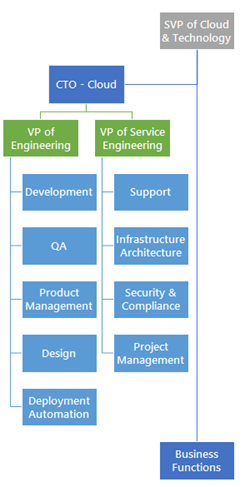
    7. Valuable to mix teams. Our Engineering team consists primarily of developers, but my team (Product Management), Design, and QA also roll up underneath it. All teams were invited to the Hack House and mixing it up was really useful. This let us have well-rounded discussions about feature priority, design considerations, development trade-offs, and even testing strategy. In the next Hack House, I’d love us to also invite the Operations team.
    8. Invest in bandwidth! Yeah, we maxed out the network at this house. 8-12 people, constantly online. I had a GoToMeeting session and somehow kicked everyone off the network! Before choosing a house, consider network options and whether you should bring your own 4G connectivity!

    All in all, a very fun week and productive effort. I’ve seen other companies do weekend hack-a-thons for team building purposes, but an extended period of collaboration was invaluable. If you want to join us at the next Hack House, we’re still looking for one or two more great developers to join the team.

  • Using the Windows Azure Service Bus REST API to Send to Topic from Salesforce.com

    In the past, I’ve written and talked about integrating the Windows Azure Service Bus with non-Microsoft platforms like Salesforce.com. I enjoy showing how easy it is to use the Service Bus Relay to connect on-premises services with Salesforce.com. On multiple occasions, I’ve been asked how to do this with Service Bus brokered messaging options (i.e. Topics and Queues) as well. It can be a little tricky as it requires the use of the Windows Azure REST API and there aren’t a ton of public examples of how to do it! So in this blog post, I’ll show you how to send a message to a Service Bus Topic from Salesforce.com. Note that this sequence resembles how you’d do this on ANY platform that can’t use a Windows Azure SDK.

    Creating the Topic and Subscription

    First, I needed a Topic and Subscription to work with. Recall that Topics differ from Queues in that a Topic can have multiple subscribers. Each subscription (which may filter on message properties) has its own listener and gets their own copy of the message. In this fictitious scenario, I wanted users to submit IT support tickets from a page within the Salesforce.com site.

    I could create a Topic in a few ways. First, there’s the Windows Azure portal. Below you can see that I have a Topic called “TicketTopic” and a Subscription called “AllTickets”.

    2013.09.18topic01

    If you’re a Visual Studio developer, you can also use the handy Windows Azure extensions to the Server Explorer window. Notice below that this tool ALSO shows me the filtering rules attached to each Subscription.

    2013.09.18topic02

    With a Topic and Subscription set up, I was ready to create a custom VisualForce page to publish to it.

    Code to Get an ACS Token

    Before I could send a message to a Topic, I needed to get an authentication token from the Windows Azure Access Control Service (ACS). This token goes into the request header and lets Windows Azure determine if I’m allowed to publish to a particular Topic.

    In Salesforce.com, I built a custom VisualForce page with the markup necessary to submit a support ticket. The final page looks like this:

    2013.09.18topic03

    I also created a custom Controller that extended the native Accounts Controller and added an operation to respond to the “Submit Ticket” button event. The first bit of code is responsible for calling ACS and getting back a token that can be included in the subsequent request. Salesforce.com extensions are written in a language called Apex, but it should look familiar to any C# or Java developer.

           Http h= new Http();
           HttpRequest acReq = new HttpRequest();
           HttpRequest sbReq = new HttpRequest();
    
            // define endpoint and encode password
           String acUrl = 'https://seroter-sb.accesscontrol.windows.net/WRAPV0.9/';
           String encodedPW = EncodingUtil.urlEncode(sbUPassword, 'UTF-8');
    
           acReq.setEndpoint(acUrl);
           acReq.setMethod('POST');
           // choose the right credentials and scope
           acReq.setBody('wrap_name=demouser&amp;wrap_password=' + encodedPW + '&amp;wrap_scope=http://seroter.servicebus.windows.net/');
           acReq.setHeader('Content-Type','application/x-www-form-urlencoded');
    
           HttpResponse acRes = h.send(acReq);
           String acResult = acRes.getBody();
    
           // clean up result to get usable token
           String suffixRemoved = acResult.split('&amp;')[0];
           String prefixRemoved = suffixRemoved.split('=')[1];
           String decodedToken = EncodingUtil.urlDecode(prefixRemoved, 'UTF-8');
           String finalToken = 'WRAP access_token=\"' + decodedToken + '\"';
    

    This code block makes an HTTP request to the ACS endpoint and manipulates the response into the token format I needed.

    Code to Send the Message to a Topic

    Now comes the fun stuff. Here’s how you actually send a valid message to a Topic through the REST API. Below is the complete code snippet, and I’ll explain it further in a moment.

          //set endpoint using this scheme: https://&lt;namespace&gt;.servicebus.windows.net/&lt;topic name&gt;/messages
           String sbUrl = 'https://seroter.servicebus.windows.net/demotopic/messages';
           sbReq.setEndpoint(sbUrl);
           sbReq.setMethod('POST');
           // sending a string, and content type doesn't seem to matter here
           sbReq.setHeader('Content-Type', 'text/plain');
           // add the token to the header
           sbReq.setHeader('Authorization', finalToken);
           // set the Brokered Message properties
           sbReq.setHeader('BrokerProperties', '{ \"MessageId\": \"{'+ guid +'}\", \"Label\":\"supportticket\"}');
           // add a custom property that can be used for routing
           sbReq.setHeader('Account', myAcct.Name);
           // add the body; here doing it as a JSON payload
           sbReq.setBody('{ \"Account\": \"'+ myAcct.Name +'\", \"TicketType\": \"'+ TicketType +'\", \"TicketDate\": \"'+ SubmitDate +'\", \"Description\": \"'+ TicketText +'\" }');
    
           HttpResponse sbResult = h.send(sbReq);
    

    So what’s happening here? First, I set the endpoint URL. In this case, I had to follow a particular structure that includes “/messages” at the end. Next, I added the ACS token to the HTTP Authorization header.

    After that, I set the brokered messaging header. This fills up a JSON-formatted BrokerProperties structure that includes any values you needed by the message consumer. Notice here that I included a GUID for the message ID and provided a “label” value that I could access later. Next, I defined a custom header called “Account”. These custom headers get added to the Brokered Message’s “Properties” collection and are used in Subscription filters. In this case, a subscriber could choose to only receive Topic messages related to a particular account.

    Finally, I set the body of the message. I could send any string value here, so I chose a lightweight JSON format that would be easy to convert to a typed object on the receiving end.

    With all that, I was ready to go.

    Receiving From Topic

    To get a message into the Topic, I submitted a support ticket from the VisualForce page.

    2013.09.18topic04

    I immediately switched to the Windows Azure portal to see that a message was now queued up for the Subscription.

    2013.09.18topic05

    How can I retrieve this message? I could use the REST API again, but let’s show how we can mix and match techniques. In this case, I used the Windows Azure SDK for .NET to retrieve and delete a message from the Topic. I also referenced the excellent JSON.NET library to deserialize the JSON object to a .NET object. The tricky part was figuring out the right way to access the message body of the Brokered Message. I wasn’t able to simply pull it out a String value, so I went with a Stream instead. Here’s the complete code block:

               //pull Service Bus connection string from the config file
                string connectionString = ConfigurationManager.AppSettings["Microsoft.ServiceBus.ConnectionString"];
    
                //create a subscriptionclient for interacting with Topic
                SubscriptionClient client = SubscriptionClient.CreateFromConnectionString(connectionString, "tickettopic", "alltickets");
    
                //try and retrieve a message from the Subscription
                BrokeredMessage m = client.Receive();
    
                //if null, don't do anything interesting
                if (null == m)
                {
                    Console.WriteLine("empty");
                }
                else
                {
                    //retrieve and show the Label value of the BrokeredMessage
                    string label = m.Label;
                    Console.WriteLine("Label - " + label);
    
                    //retrieve and show the custom property of the BrokeredMessage
                    string acct = m.Properties["Account"].ToString();
                    Console.WriteLine("Account - " + acct);
    
                    Ticket t;
    
                    //yank the BrokeredMessage body as a Stream
                    using (Stream c = m.GetBody&lt;Stream&gt;())
                    {
                        using (StreamReader sr = new StreamReader(c))
                        {
                            //get a string representation of the stream content
                            string s = sr.ReadToEnd();
    
                            //convert JSON to a typed object (Ticket)
                            t = JsonConvert.DeserializeObject&lt;Ticket&gt;(s);
                            m.Complete();
                        }
                    }
    
                    //show the ticket description
                    Console.WriteLine("Ticket - " + t.Description);
                }
    

    Pretty simple. Receive the message, extract interesting values (like the “Label” and custom properties), and convert the BrokeredMessage body to a typed object that I could work with. When I ran this bit of code, I saw the values we set in Salesforce.com.

    2013.09.18topic06

    Summary

    The Windows Azure Service Bus brokered messaging services provide a great way to connect distributed systems. The store-and-forward capabilities are key when linking systems that span clouds or link the cloud to an on-premises system. While Microsoft provides a whole host of platform-specific SDKs for interacting with the Service Bus, there are platforms that have to use the REST API instead. Hopefully this post gave you some insight into how to use this API to successfully publish to Service Bus Topics from virtually ANY software platform.